






Football places different demands on the body depending on whether a player is training, preparing for a match, competing, or recovering. Because of this, eating exactly the same way every day may not always be the most practical approach.
Instead of thinking only about individual foods, football players can benefit from organizing their meals around their daily activity. Meal timing, food choices, hydration, and consistency can all play a role in supporting training and recovery.
Why Meal Timing Matters for Football Players
Football training can involve running, sprinting, changes of direction, strength work, and repeated high-intensity efforts. These activities require adequate energy and nutrients.
The goal is not to follow a complicated eating schedule. A more practical approach is to consider what the day involves.
For example, a training day may require a different meal schedule from a rest day. Similarly, a match day can require more attention to meals before and after the game.
A simple structure can look like:
Breakfast → Lunch → Pre-training meal or snack → Training → Recovery meal → Dinner
The exact timing will depend on when training takes place and on the player’s individual needs.
Building Meals Around Training
One useful way to organize football nutrition is to start with the training schedule.
On a training day, meals can include a source of carbohydrates, a source of protein, fruits or vegetables, and other nutritious foods. Carbohydrate-rich foods such as rice, pasta, potatoes, oats, bread, and fruit can provide useful fuel for active players.
Protein-rich foods such as eggs, dairy products, fish, chicken, beans, and lentils can also be included as part of a balanced eating pattern.
Rather than relying on one particular food, variety is generally a better approach.
For players who want a broader overview of nutrition principles, this guide to a healthy diet for football players explains the main components of a balanced football nutrition approach.
What to Eat Before Football Training
The meal or snack before training should be practical and easy to tolerate.
Depending on the time available before exercise, options may include:
- Oatmeal with fruit
- Yogurt and fruit
- Toast with a suitable topping
- Rice with a lean protein source
- Pasta with a light sauce
- A banana or other fruit as a smaller snack
A larger meal may be appropriate several hours before training, while a smaller snack may work better when there is less time available.
There is no single pre-training meal that works perfectly for every player. Food preferences, training intensity, meal timing, and individual tolerance all matter.
Eating After Football Training
After a demanding training session, a balanced meal can help provide nutrients needed for normal recovery.
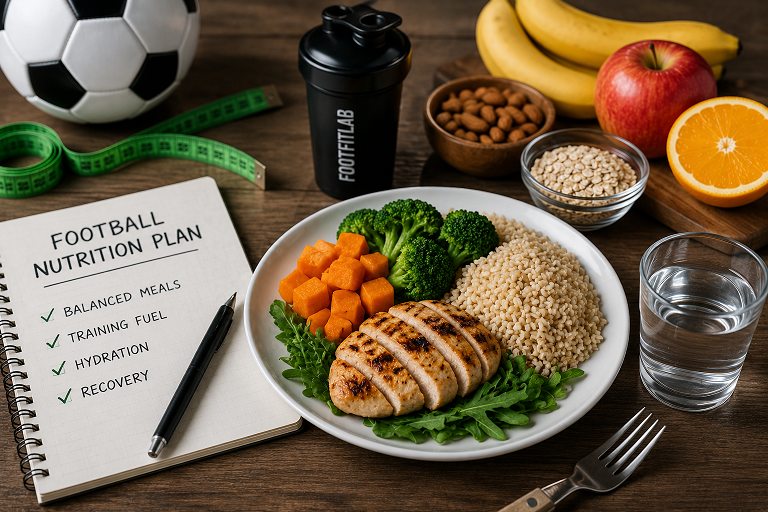
A practical post-training meal might combine:
Carbohydrates + Protein + Fruits or Vegetables + Fluids
For example, rice with chicken and vegetables or potatoes with fish and vegetables can provide several important nutrients in one meal.
Players should also remember that recovery nutrition is not limited to one meal immediately after training. What they eat throughout the rest of the day also contributes to their overall nutritional intake.
Organizing Food on Match Days
Match days require a little more planning because players need to arrive at the game adequately fueled without eating foods that are uncomfortable to digest.
A player’s match-day schedule might include:
Breakfast → Main pre-match meal → Optional snack → Match → Recovery meal
The main meal before a match can include familiar carbohydrate-rich foods combined with a moderate amount of protein. Examples could include rice with chicken, pasta with a light sauce, potatoes with a suitable protein source, or another meal the player already knows they tolerate well.
Trying unfamiliar foods immediately before an important match is generally not a good idea. Players can test different meals during normal training days and learn which options work best for them.
What About Rest Days?
Rest days do not necessarily mean that football players should stop paying attention to nutrition.
Even when there is no training session, the body still needs nutrients for normal functions and recovery from previous activity.
A rest-day meal pattern can remain balanced while being adjusted to the individual’s activity level.
Meals can continue to include:
- Whole grains and other carbohydrate sources
- Protein-rich foods
- Fruits and vegetables
- Dairy or suitable alternatives
- Nuts and seeds
- Healthy sources of fat
- Adequate fluids
The exact amount of food required will vary between individuals.
Creating a Weekly Football Meal Routine
Planning meals for several days at once can make football nutrition easier to manage.
A simple weekly approach is to identify:
- Training days
- Match days
- Rest or recovery days
- Training and match times
- Convenient meals and snacks
Players can then choose meals that fit each type of day.
For example, a week could contain several training days, one match day, and one or two recovery days. Instead of creating a completely different diet every day, players can prepare a selection of familiar meals and adjust the timing according to their schedule.
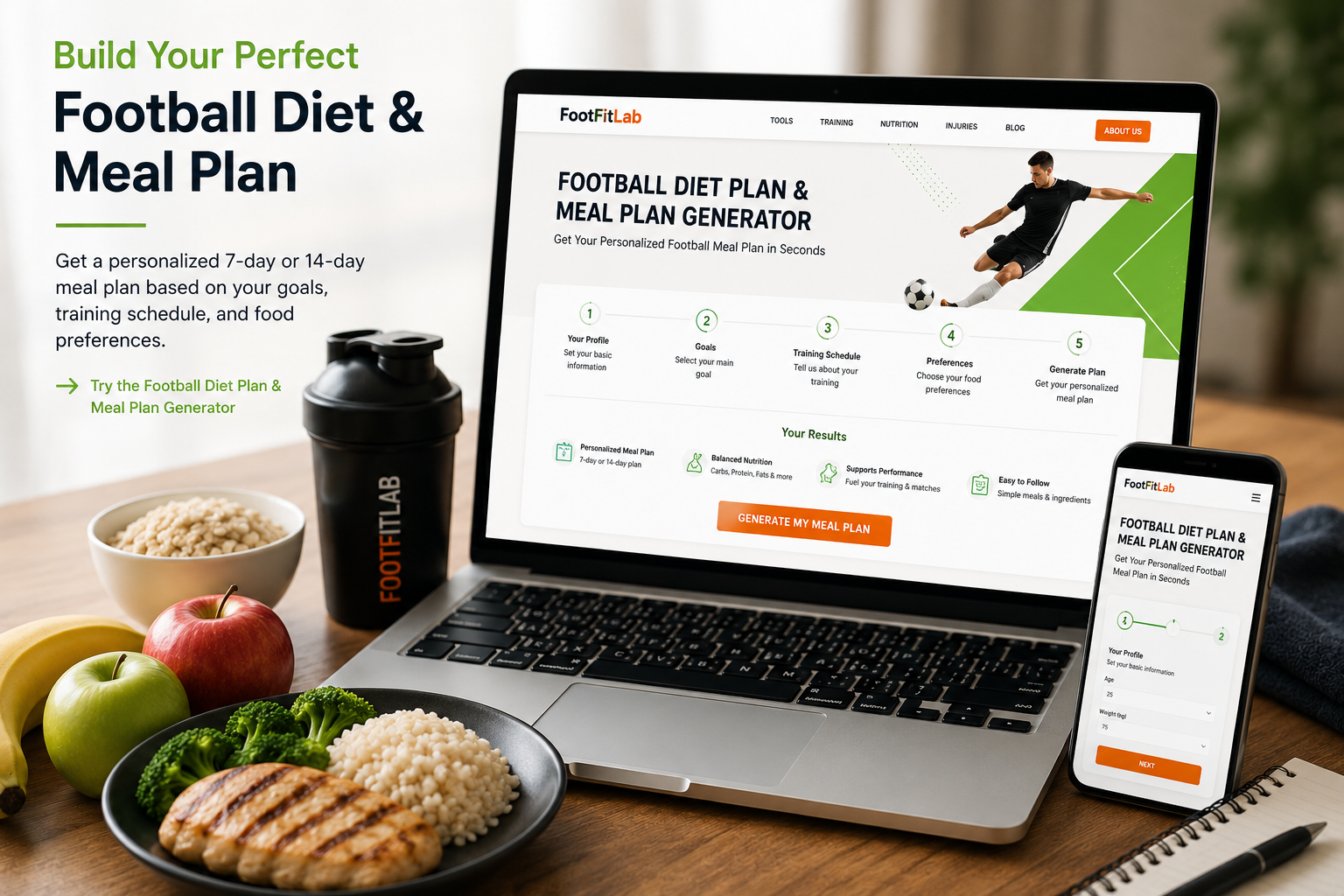
For players who want to turn this idea into a structured weekly plan, the Football Diet Plan & Meal Plan Generator can create a 7-day or 14-day football meal plan based on information such as goals, food preferences, and training schedule.
Keep Football Nutrition Practical
A football nutrition routine does not need to be complicated.
The most useful plan is often one that a player can actually maintain during a busy week of training, school, work, travel, and matches.
Preparing a few basic foods in advance can make this easier. Rice, pasta, potatoes, oats, eggs, yogurt, fruit, vegetables, and suitable protein sources can be combined in many different ways.
It can also help to keep convenient snacks available for days when training times change unexpectedly.
The focus should be on building a consistent and balanced eating pattern rather than searching for one perfect food or meal.
Hydration Is Part of the Plan
Food is only one part of football nutrition. Hydration is also important, particularly around training and matches.
Players should drink regularly throughout the day and consider the conditions in which they are exercising. Hot weather, long sessions, and heavy sweating can increase fluid requirements.
Rather than waiting until training begins to think about hydration, making fluids part of the normal daily routine can be more practical.
A Simple Way to Think About Football Meals
A useful starting point for many meals is:
Carbohydrate + Protein + Fruit or Vegetables + Fluids
For example:
Rice + chicken + vegetables + water
or
Oats + yogurt + fruit + water
This is not a rigid formula. Football players have different nutritional needs, food preferences, schedules, and goals.
The important idea is to create a flexible eating routine that supports the demands of football while remaining realistic for everyday life.
Final Thoughts
Good football nutrition is not simply about choosing individual “superfoods.” It is about creating an eating routine that works around training, matches, recovery, and everyday life.
Planning meals ahead of time, choosing familiar nutritious foods, paying attention to meal timing, and staying hydrated can make football nutrition easier to manage.
source : FootFitLab.com
Post a comment