





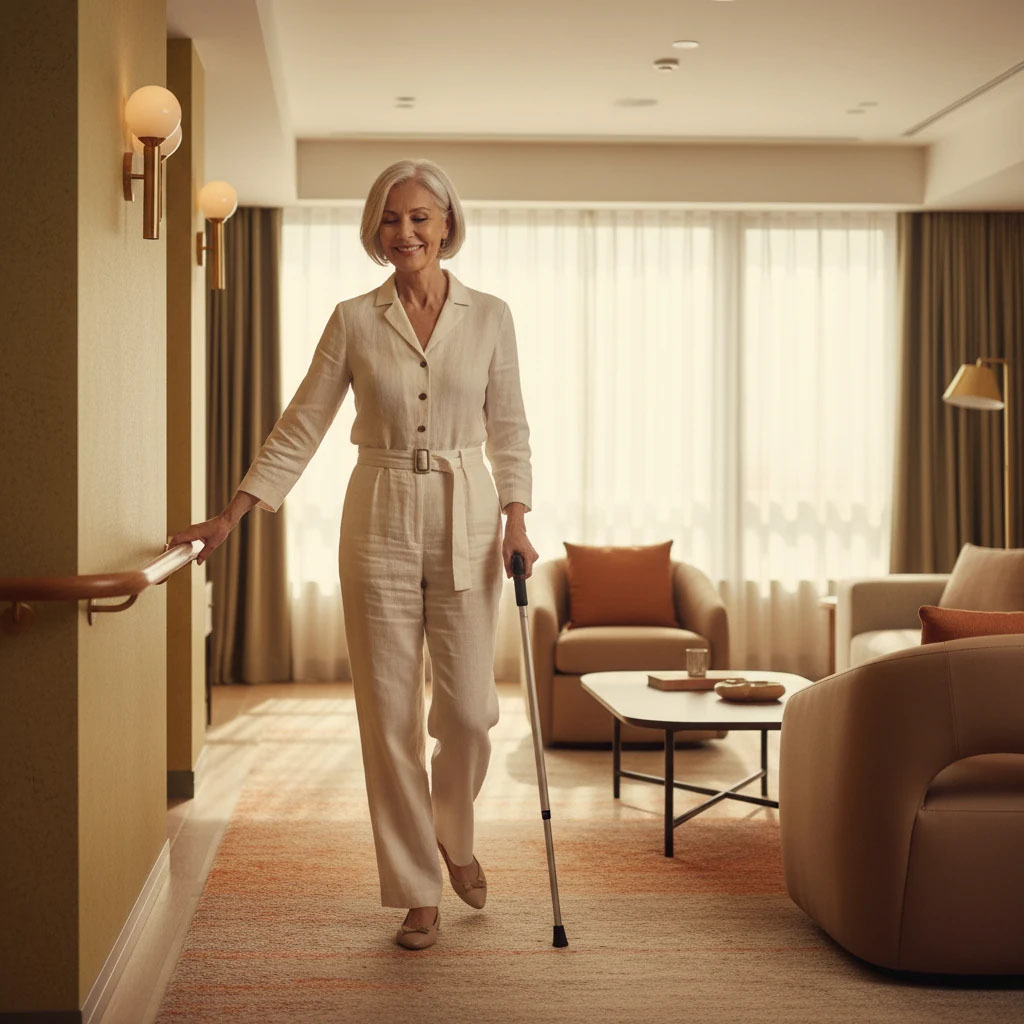
When my aunt returned home after her hip surgery last winter, the family believed the hardest part was already behind us. She was determined, disciplined, and ready for recovery—at least that’s what we all assumed. But the second night proved something different: home isn’t always the safest place after surgery, especially when balance, confidence, and mobility are compromised.
What followed became an eye‑opening lesson on how small details inside a house can deeply affect a senior’s recovery. And interestingly, the most effective changes weren’t expensive equipment or high‑tech solutions—they were simple adjustments that made her feel stable, independent, and in control.
Why Post‑Surgery Homes Become High‑Risk Zones
Most people underestimate how drastically mobility changes after procedures like hip replacement, spinal surgery, or even extended hospitalization. Seniors often experience:
- Limited balance
- Slower reaction time
- Difficulty bending
- Weak grip strength
- Fear of moving alone
The combination creates a hidden danger: everyday essentials suddenly become “fall triggers.” Reaching for a phone, walking to get water, or carrying medication from room to room—these simple activities quickly turn risky.
The First Fix We Didn’t See Coming: Light
Her physical therapist said something that stuck with me: “Seniors don’t fall because they walk. They fall because they hesitate.”
Dim hallways, shadowy corners, and late‑night bathroom trips made her pause often, and hesitation is where missteps happen.
We added soft amber nightlights, brighter bathroom bulbs, and a small LED strip along the bedroom floor. The next morning she moved through the house with noticeably more ease. Nothing magical—just thoughtful lighting that let her brain and eyes work together.
The Real Danger: Carrying Essential Items While Using a Walker
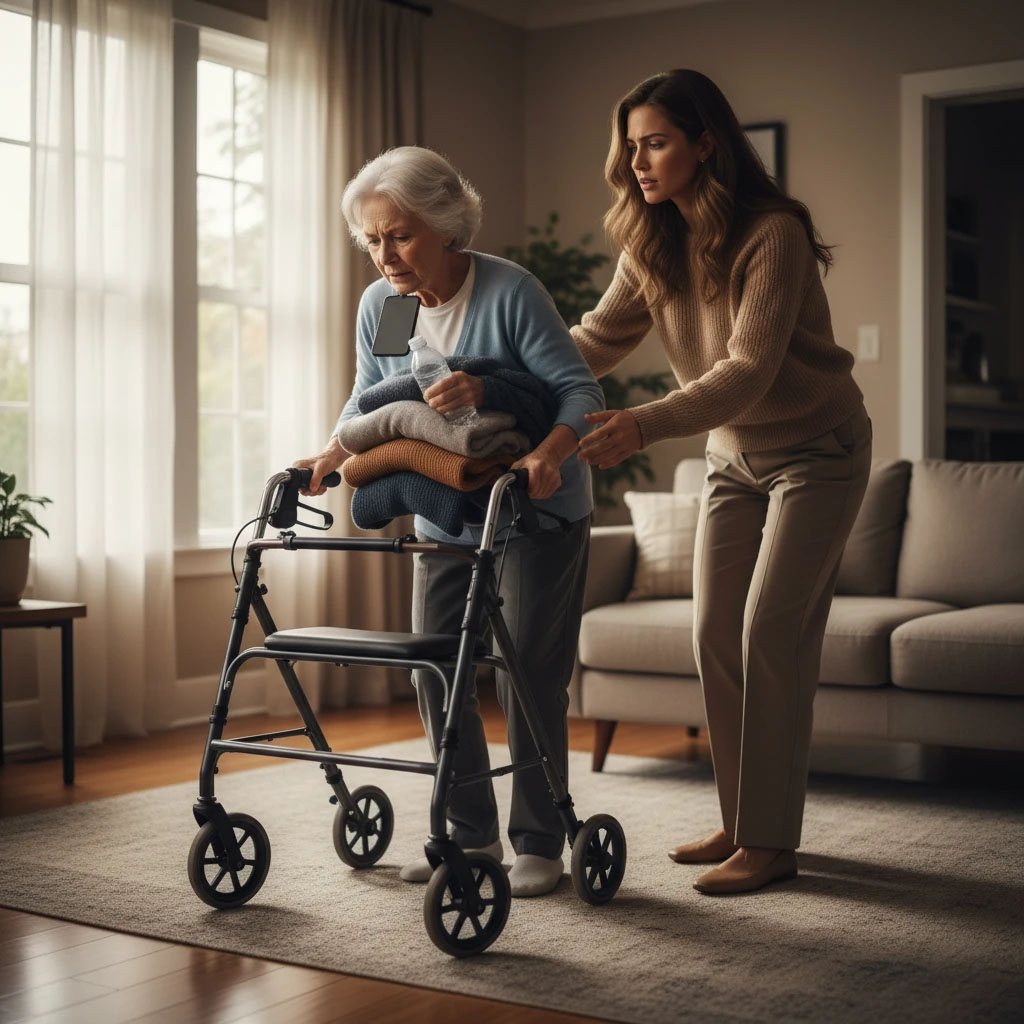
The biggest surprise? She struggled most when trying to carry small things—her glasses, notepad, phone, tissues, and medication.
Carrying anything while holding a walker forces seniors to loosen their grip, lean forward, and shift weight unevenly. This creates one of the highest fall‑risk scenarios after surgery.
A home‑care nurse suggested reorganizing her essentials so they were always within reach. That’s when we discovered how useful a simple, supportive walker organizer could be. Mid‑conversation and entirely naturally, she mentioned she could finally keep her phone, tissues, and daily pills safely at hand thanks to a lightweight and secure walker attachment designed for daily essentials—a great example is this walker bag available on BestiPro: a lightweight and secure walker attachment designed for daily essentials.
That small upgrade reduced her unnecessary trips across the room by nearly half.
Confidence Is a Medical Factor—Not an Emotion
One of the most overlooked parts of recovery is the psychological side. When seniors feel dependent or unstable, they start rushing, grabbing furniture, or trying to “just get something quickly.” Ironically, independence—not supervision—creates the safest mobility.
Keeping essentials reachable, creating clear walking paths, and allowing them to move without calling for help every ten minutes restores something surgery often steals: confidence.
And confident movement reduces falls more than any device.
Science, Environment, and a Fascinating Discovery
During these weeks, I went down a rabbit hole researching how environment shapes recovery.
One particularly thought‑provoking article explored a groundbreaking discovery in Parkinson’s treatment inspired by extreme altitude stress similar to the conditions on Mount Everest. You can read it here: a groundbreaking discovery inspired by Everest‑like conditions.
While seemingly unrelated, the core principle was striking:
Environmental factors profoundly affect neurological resilience.
If extreme conditions can influence brain recovery, then certainly the home environment can shape physical recovery after surgery.
Practical Adjustments That Truly Work
Here are the improvements that helped the most—not theoretically, but in real daily use:
1. Define a Primary Path
We created a clear route from her bedroom to the bathroom and another to the kitchen. No rugs, no small tables, no cables.
2. Switch to Slip‑Resistant Shoes
Her physical therapist emphasized that the wrong footwear creates “micro‑slips,” which seniors rarely recover from.
3. Keep Hydration Close
She stopped making constant trips across the room once she started keeping a small water bottle inside her walker organizer.
4. Lower the Need to Bend
We moved everything she frequently used to waist height. No bending meant fewer balance shifts.
5. Introduce Rhythmic Walking
Soft instrumental music helped her maintain a steady pace—an unexpected but surprisingly effective trick.
When You Should Bring in a Medical Professional
If a senior shows:
- increased dizziness
- sudden fear of walking
- difficulty controlling posture
- repeated small stumbles
then it’s time to consult a physical or occupational therapist.
The Takeaway Most Families Miss
Looking back, the biggest realization was this: tiny home adjustments often have the biggest impact on recovery.
Not everything requires new equipment or major renovations. Sometimes, adjusting lighting, clearing pathways, and giving seniors a smart way to carry daily essentials safely can dramatically increase their confidence and reduce fall risks.
Recovery doesn’t happen in the hospital—it happens at home. And a safe home doesn’t need to be complicated; it needs to be intentional.
Post a comment